
Transformation
In South Africa, we promote social transformation in the interest of nation building, most notably by advancing broad-based black economic empowerment (BBBEE) initiatives.
Highlight
Significant progress with smallholder producer programme (case study below)
Challenge
Managing the impact of new sector-specific BEE codes
The revised agri-BEE codes against which Tiger Brands will be assessed in future were passed by parliament on 1 November 2017. These codes will have to be gazetted before they are officially legislated. The current Tiger Brands BBBEE certificate is valid until December 2018.
As the revised codes are still to be legislated, the company was assessed against the old codes and retained its level 3 rating for the year as shown below.
We will begin work to migrate the group's verification to the new agri-BEE codes in preparation for impending legislation. Our internal assessment indicates that the group will temporarily drop to level 7 (discounted to level 8) given the new minimum requirements for priority elements (ownership, skills development, enterprise and supplier development).
Tiger Brands BBBEE scorecard
| Available points 2017 |
* | 2017 | 2016 | 2015 | |||||
|---|---|---|---|---|---|---|---|---|---|
| Ownership | 20 | 19,7 | 17,6 | 20,3 | |||||
| Management control | 10 | 5,8 | 5,0 | 7,6 | |||||
| Employment equity | 10 | 5,8 | 5,8 | 5,6 | |||||
| Skills development | 20 | 17,0 | 15,7 | 12,9 | |||||
| Preferential procurement | 20 | 16,6 | 18,7 | 19,2 | |||||
| Enterprise development | 10 | 2,3 | 3,4 | 7,0 | |||||
| Socio-economic development | 10 | 10,0 | 10,0 | 10,0 | |||||
| Total | 100 | 77,0 | 76,1 | 82,6 | |||||
| Level | 3 | 3 | 3 |
* Tiger Brands is measured against agriculture sector codes gazetted on 28 December 2012.
| BBBEE ownership | % |
| Brimstone (a black empowerment investment company) | 1,0 |
| Tiger Brands Foundation | 5,0 |
| Employees Black Managers Trusts (BMT I and BMT II) | 2,2 |
| General staff trust | 0,1 |
| Thusani trusts (beneficiaries are children of black employees) | 2,0 |
| Effective black ownership (using the exclusion and modified flow-through principle) | 35,3 |
| Total black women | 6,3 |
Preferential procurement
In our supply chain, we monitor environmental, social and governance performance through a questionnaire distributed annually to our highest-risk suppliers. The results are collaboratively reviewed by the procurement and safety, health and environment teams. Our procurement policy now includes preferential procurement commitments. As part of our execution strategy for FY18, our preferential procurement policy will be reviewed and updated in line with the new BBBEE codes.
Our ambition to play a leading role in developing the agriculture sector remains a key priority, with R73 million of fresh produce sourced from black emerging farmers in FY17. Through our partnership with the Department of Agriculture, Forestry and Fisheries, we have earmarked R30 million for enterprise and supplier development, focused primarily on emerging farmers.
Compliance under the revised BBBEE codes is expected to be a longer-term process as suppliers implement the required steps to improve their scorecard levels. Our procurement team is working closely with suppliers to understand their scorecard trajectories and inform our sourcing strategies.
We remain focused on supporting black-owned and small businesses, spending R4,3 billion and R1,9 billion in these categories during the year. We regard this as a business imperative that will contribute to a vibrant and competitive supply landscape in South Africa in the longer term. Our BBBEE strategy roadmap is being reviewed against the new agri-BBBEE codes which are likely to be legislated in 2018.
Enterprise and supplier development
We have projects in place across our value chain, focusing on growing small businesses that we can support over the longer term. In FY17, we spent R15,0 million on enterprise and supplier development, exceeding planned expenditure for the period. As example, we mentor farmers producing tomatoes for the group in Limpopo (case study below) and have extended this to other commodities such as wheat.
Creating shared value
Our purpose is to nourish and nurture more lives every day. How we bring this purpose to life for our employees, for our communities and for the planet illustrates how we create shared value for all stakeholders by generating sustainable economic value while addressing society's needs.
Tiger Brands is a large consumer of agricultural products – some 2 million tons per annum, with 65% bought locally. In the past, only 23 000 tons of agricultural produce was procured from smallholder farmers, or just 1% of produce sourced. We have focused on redesigning our procurement and supply value chain to ensure a sustainable portion is opened up to farmers who have not previously participated.
We have initiated a programme to transform our supply chain and increase the volume of produce purchased from local smallholder producers. As a result, new jobs are being created and sustained by our emerging suppliers backed by the security of offtake agreements with Tiger Brands (case study below).
We have already made significant progress and will build on these early successes to expand the programme.
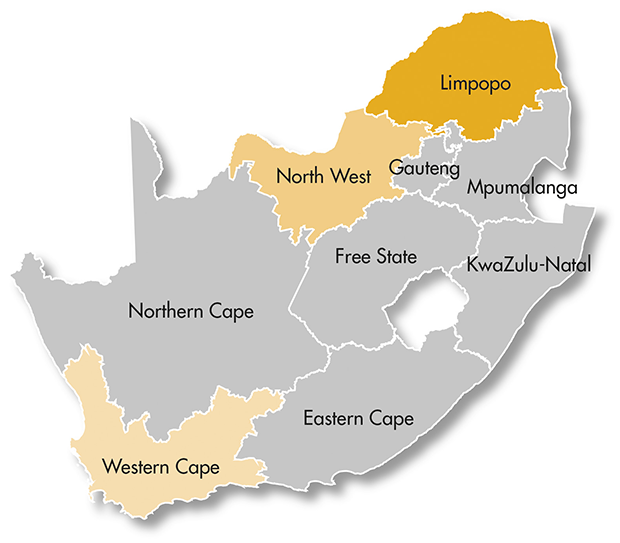
The intensive support programme in Limpopo for tomato farmers is proving successful under the mentorship of Technoserve, supported by our Groceries business. This will provide a platform for Tiger Brands to extend similar programmes to other provinces and crops in future, using a combination of own and external funding.
CASE STUDY
Smallholder producer programme
25 000 tons,
92 farmers

Limpopo (Tiger Brands 2017 investment R9,3m; total R14,6m)
- Tomatoes – 70 farmers producing 20 000 tons (revenue R23m)
- 37 farmers, now stable producers, managed directly by Tiger Brands
- Special programme for 30 farmers including training, mentoring and agricultural support in place with Technoserve
- On track to increase production by 5 000 tons in 2017
- Documentary being produced to track the progress from land preparation to planting, harvesting, pulping and final product on shelf
- Beans – 14 farmers; 600 tons contracted for 2018 (new farmers introduced through mentorship programme)
- Wheat – 600 tons contracted for winter production with offtake agreements from Tiger Brands

North West
(2018)
- Sorghum
(Potchefstroom) - Maize
(Gauteng)

Western Cape
- Butternuts and figs
– 4 farmers, 500 tons - Pears, apricots and peaches – 22 farmers, 3 000 tons
- Tomatoes - 5 farmers, 660 tons
Background to the programme
Technoserve completed an in-depth study of our manufacturing footprint, crop requirements and the availability of emerging farmers who could meet these requirements. Key criteria included quality specifications, farmer ability and economical radius to the factory. Farmers who met these requirements were then formally evaluated.
The programme spans vegetables over three 18-month phases, focusing on Limpopo, Highveld/Gauteng and North West provinces. As a parallel track, grain crops (maize, sorghum and soya) are being explored, but timing will depend on specific requirements.
Through this programme, our vision is to increase smallholder production from 23 000 tons to 35 000 tons by 2021. Revenue paid to these producers is expected to increase from about R23 million in FY18 to R100 million by 2021.
Key highlights
Phase 1 of the smallholder farmer programme focuses on tomatoes. The 30 participating farmers are equally split between men and women, and five are classified as youth (under 35). Salient features to date include:
- All farmers trained in Technoserve best agronomy practice model covering business economics, land preparation and planting practices, fertilisation, irrigation, pest and disease control. As a result, yields almost doubled to 58 tons per hectare
- Tiger Brands allocated R9,3 million to fund this technical support as part of our commitment to enterprise and supplier development
- 100 hectares under production, with over 5 800 tons delivered to Tiger Brands (total sales revenue of over R9 million, with almost R3 million accruing to farmers after deducting input costs prefunded by Tiger Brands. Some 86% of input loans are currently being recovered)
- Selling to other markets generated a further R1 million for the farmers
- 191 new permanent jobs and 500 seasonal jobs created.
Winter wheat cluster
The initial plan with the Marble Hall/Burgersfort farmers was to produce beans on 500 hectares. Due to challenges with input funding, we missed the planting season for beans and postponed this programme to January 2018.
To keep the farmers engaged, they were encouraged to experiment with a winter wheat crop on 73 hectares. Production is on track and harvesting was completed in November in time to prepare land for bean production which will start in December. Salient features include:
- Five businesses with a total of 18 members (14 men and four women)
- Five key members in each enterprise completed Technoserve training modules.

The tomato value chain explained

Looking forward
- Tomatoes: The project with the Nwanedi farmers will continue next season, anticipating that our supply chain will increase volumes from this source if group quality standards are met. The farmers will continue to receive technical support, although this will taper off so that they are able to manage with reduced technical and input support by the third season. We anticipate planting 300 hectares which will yield 18 000 tons with a value of R30 million (depending on offtake agreements with our supply chain).
- Beans (Marble Hall/Burgersfort/Veeplaas): Production preparations will start in December and seedlings will be planted in January 2018. Seeds have already been bought and are being stored. Some 500 hectares of beans will be planted with an expected yield of 1 250 tons and revenue of R14 million.