International (including Exports)
Our export basket into southern Africa includes brands such as Benny stock powder, Crosse & Blackwell, Ingram’s, Doom, All Gold and KOO.
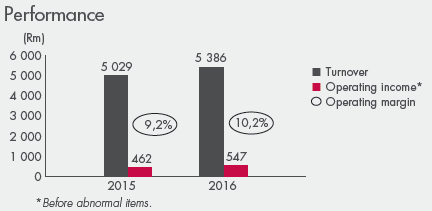
The performance of the Exports division (including Davita which exports Benny seasoning ingredients, Jolly Jus and Davita powdered soft drinks to 33 countries across Africa) was below the previous year.
Macro-economic issues in Nigeria, Mozambique, Zimbabwe and Zambia resulted in currency devaluations and foreign exchange shortages, in turn affecting key customers’ ability to stay within their credit limits and replenish stocks. In addition, import permit regulations imposed in Zimbabwe significantly affected performance in the fourth quarter.
The Tiger Brands export basket into southern Africa, particularly Mozambique, Zambia and Zimbabwe, includes brands such as Benny stock powder, Crosse & Blackwell mayonnaise, Ingram’s Camphor Cream, Doom, All Gold and KOO. Demand for these brands remains robust, despite challenging economic conditions in these countries. The division continues to invest in these core brands to ensure sustained visibility and awareness.
Two major capex projects totalling R138 million were commissioned at the Davita factory in the review period to enhance capacity and overall compliance. This will ensure adequate ongoing supply to address local and export demand as well as enhanced compliance to safety, health, environment and quality standards.
Despite external challenges in the current year, the outlook for the new financial year is positive with renewed focus on existing and new markets to drive growth.
|
 Visit our
Central Africa
Cameroon: Chococam (74,7% held)
Chococam, which manufactures chocolate bars, chocolate
spread, candy, gum and powdered beverages, recorded
a seventh consecutive year of solid growth in turnover and
operating income despite difficult economic conditions.
These included protracted low oil prices (affecting all six
countries in Central Africa), the insecurity created by
regional conflict, and recent naira devaluation which
generated a high increase in cheap imported goods
from Nigeria.
Strong volume growth in FY16 was driven by the chocolate bar and spreads categories in particular. Other key drivers of this performance include the continued investment in brands through traditional and digital media support, trade and consumer activations, and improved coverage of the informal retail universe from 70% to 80%. Customer service levels remained high at 97%. The contribution to turnover from export markets (including Gabon, Chad, Congo-Brazzaville and Equatorial Guinea) improved despite trade disruptions created by presidential elections in Gabon, Chad and Congo-Brazzaville during the year.
Another important growth driver is the company’s innovation strategy which allowed it to accelerate top-line growth and reinforce its strong market positions in all categories. Innovation contributed 7,2% to turnover from 6,5% in the prior year. During the period, innovations in powdered beverages, spreads, candy and chocolate bars were successfully taken to market.
Chococam’s strong performance is reinforced by its selective investment in capital projects to drive capacity enhancements and a safer working environment, including employee well-being and productivity. As a result, it is well positioned for growth and the outlook for the new year remains positive.
East Africa
Ethiopia: East Africa Tiger Brands Industries (EATBI)
(51% held)
EATBI’s disappointing performance in FY16 was affected
by severe drought in the eastern and northern parts of the
country and ongoing protest action and unrest which
impacted trading.
In June 2016, Tiger Brands announced its decision to dispose of its 51% shareholding in this company to its Ethiopian partner and minority shareholder.
Given the uncertainty of the timing of completing the transaction, this business has not been reflected as an asset held for sale at 30 September 2016. Both parties remain committed to the sale and will continue to work together to fulfil all remaining suspensive conditions.
Kenya: Haco Tiger Brands (51% held)
Haco Tiger Brands is a leading consumer goods
manufacturer and distributor of stationery, shaving, hair
care, skin care, home care and food products in the East
African region (Kenya, Uganda, Ethiopia, Tanzania,
Rwanda and Burundi).
The main objective in 2016 was to stabilise the business following revenue recognition issues in FY14, which had a significant negative impact on FY15 performance. This objective was achieved as sales volumes recovered in line with expectations despite tough regional economic conditions, including foreign currency shortages in Ethiopia, foreign exchange volatility in Uganda and Rwanda, and civil unrest in Burundi.
Key drivers behind this performance reflect the focus on end-to-end excellence in execution for priority brands from product listing, trade visibility to consumer engagement.
The contribution to turnover by export markets (Uganda, Ethiopia, Rwanda, Burundi, Tanzania and Congo) increased from 44% last year to 53% driven by successful and targeted marketing campaigns. Defending and growing sales and market shares in the Kenyan market is key to ensure sustained growth.
West Africa
Deli Foods
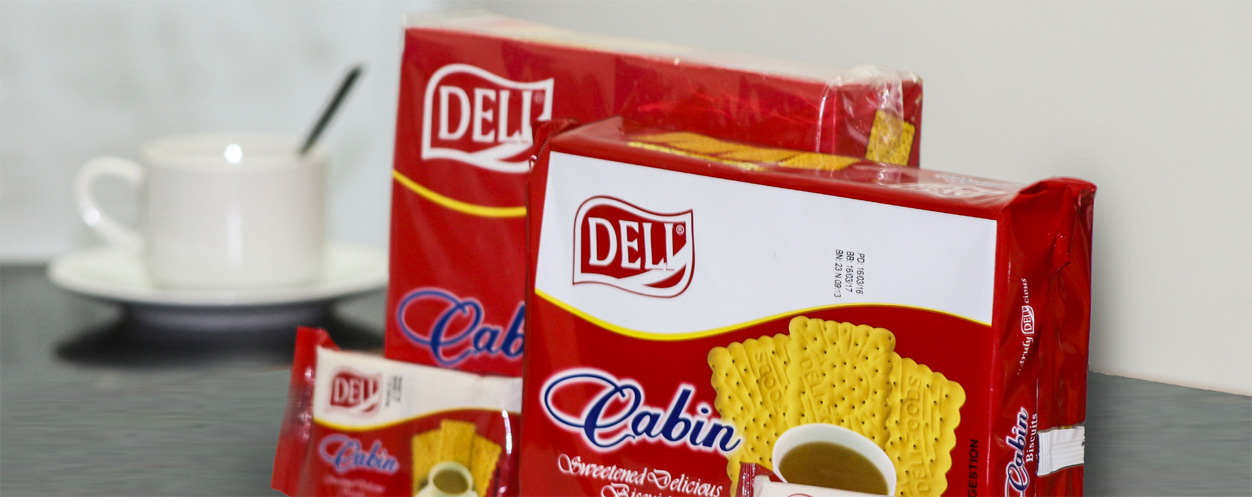
The performance of wholly owned Deli Foods was affected
by currency devaluation and its impact on the cost of wheat
imports. In addition, ongoing power outages and the
introduction of value-added tax on biscuits have had a
further adverse effect on the business.
Turnover increased 16% to R477 million (2015: R412 million). The inability to recover significant increases in key raw materials, resulted in losses rising 27% to R49 million (2015: R38 million).
Economic conditions and intense competition, exacerbated by electricity shortages, will continue to make trading in Nigeria challenging in the short term.
Performance in FY17 is expected to be based on the key priorities of continuous cost reductions, improving efficiencies across the value chain, an expanding presence in the modern trade and continued innovation. With ongoing work on its growth strategy, the business will be well placed to drive profitable growth through expansion in current and new categories.
Deciduous Fruit (LAF)
Given its export volumes, this company is sensitive to
currency exchange rates and low economic growth rates in
developed markets where it competes. To counter this, the
business focused on increasing margins through geographic
and product optimisation, and operating efficiencies.
Operating income increased by 59% to R148 million, driven by favourable exchange rates, volume growth into the Far East and Australasia, ongoing manufacturing efficiencies from improved yields, and cost containment. In 2016, LAF won the National Productivity Award for the most productive manufacturing company in the Western Cape region. Run by Productivity SA, this award was established by the government to enhance the productive capacity of the country and criteria included the facility’s approach to productivity, its sustainability strategy in terms of social impact, safety and working environment, environmental impact, quality as well as growth and development.
In line with its growth strategy, expansion into related value-added products continued, with additional sales of dried fruit and tomato paste. A number of commercial trials of new products were successfully completed, with product launches planned for the coming season.
As agricultural output normalises, communication between the company and grower representatives to address issues affecting farmers remains a priority.
The global industry remains highly competitive and financial instability in Greece, the largest canned-fruit exporter in the world, directly affects the market given the pricing leverage enjoyed by Greek manufacturers. Despite this, prospects for the business remain positive with the continuous shift to higher-growth markets. The business has significantly increased sales to China over the past four years and continues to focus on growth markets, such as China and Russia, to replace more saturated and mature markets like Europe.