
Home, Personal Care and Baby
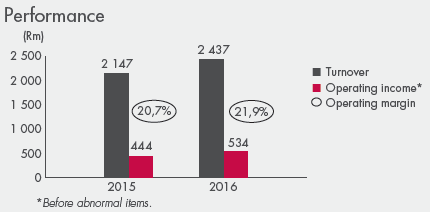
The division is now in the second year of the rebase and rebuild strategy and has responded positively to various initiatives. Turnover increased 13% to R2,4 billion and operating income 20% to R534 million resulting in an operating margin of 21,9%.
Salient features
- Turnover growth of 13% with operating income growth of 20%
- Key efficiency benchmarks achieved
- Exceptional performance in major categories, with body care and pest recording strong growth
 Segment overview
This division houses a portfolio of entrenched brands, many with a heritage and pedigree built over years.
Strategy
The division is focused on supporting the long-term competitiveness of its brands with appropriate investment in marketing, research and new product development.
The division is now in the second year of the rebase and rebuild strategy and has responded positively to various initiatives.
Performance
The success of the strategy is reflected in turnover increasing 13% to R2,4 billion (2015: R2,1 billion), driven in part by 6% volume growth. Operating income rose 20% to R534 million, with an operating margin of 21,9%.
|

 Visit our
Home care
Consumer-relevant innovation and excellent in-store execution underpinned a solid performance from the home enhancement segment. In the pest segment, significant share gains, as well as innovation into new segments, supported an excellent performance. Focused customer and marketing
activities contributed to good growth in the sanitation
segment, particularly the Jeyes brand.
Personal care
Growth in this category slowed, reflecting the pressure on
consumer income exacerbated by key competitors investing
aggressively in pricing strategies and brand support. The
business countered these challenges to some extent by
focusing on innovation (for example, Ingram’s Triple
Glycerine and tissue oil creams) and specific propositions
for key channels. The business recorded strong
performances from core brands in the body care category
such as Ingram’s, Dolly Varden and Skin Clinic.
Baby care
This business faced a difficult year as economic conditions
affected homogenised baby food consumption, and
consumers shifted from branded food to more affordable
home cooking and general food brands. Marketing
investment rose by 5%. Since launching in July 2015, the
new pouch format has grown exponentially, with Purity’s
share of this format reaching 70%.
During the period, the business leveraged off the strength of the Purity brand with a number of launches, including growing-up milk and Purity Junior. The launch of growing-up milk provides entry into a category with 7% annual volume growth while Purity Junior is a range of delicious and nutritious snacks, meals and drinks for pre-schoolers. Since launch, the range has driven incremental growth for the baby snacks portfolio. In baby well-being, a baby-friendly insect repellent and fabric conditioner were launched under Purity & Elizabeth Anne’s while the vitamin supplements range under the Vi-daylin brand was extended to toddlers and older children.
Outlook
In FY17, the focus remains on cost reductions, continued innovation in line with strategy and improving efficiencies, especially in the nutrition manufacturing units and Isando reconfiguration project, which was fully commissioned in November 2016. In the longer term, we are confident the Baby division is well positioned, with the leading brand Purity to drive sustained market and share growth by offering consumers affordable pack sizes, value-added promotions and innovation that meets their needs for convenience and time-saving solutions. We will continue to focus on innovation across all categories in Home and Personal Care to reinforce our core brands.
MANGWANANI AND AIROMA COLLABORATION
 Mangwanani is an
award-winning proudly
South African day spa
with 26 branches in
Gauteng, Western Cape
and KwaZulu-Natal.
The brand is well known
among urban women in
the upper-income segment,
synonymous with rest and relaxation, and acknowledged
as originating in and inspired by Africa. As such, it
provided a unique platform for an air-care range.
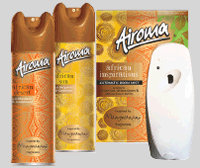
The common ground of the Airoma/Mangwanani collaboration is fragrance, combining Mangwanani’s credibility in “African fragrances” with Airoma’s heritage in “home fragrances”. In a spa environment, fragrance enhances the ambiance – a consumer need that Airoma aims to address.
This co-branded opportunity is founded on the global trend of collaboration but with local flavour. As a form of marketing, it provides a unique competitive advantage for Airoma and an opportunity to elevate the air-care category in the retail trade out of sanitation and into the home.
INGRAM’S INNOVATION A HIT WITH CONSUMERS
 Ingram’s has been a household
brand for decades. Based on
a deep understanding of local
consumer behaviour, we launched
Ingram’s Triple Glycerine. In
just three years and in a hotly
contested market, it has overtaken
established competitors to become
one of the best-selling items in its category in key retail
outlets, second only to the 500mℓ pack of Ingram’s
Camphor Cream.
The rationale for this innovation stemmed from home visits with the people who buy our products (noting that consumers already decanted glycerine into their creams) and complemented the Ingram’s brand strategy of launching body care products that have unique functional benefits based on relevant local ingredients/ behaviours.
The success of this and other launches (such as Ingram’s Tissue Oil Cream) proves our ability to effectively compete given our intimate understanding of the needs and wants of South African consumers. These deep insights guide the development of relevant and unique local products by a very capable new product development team.