Strategic choices for sustained growth
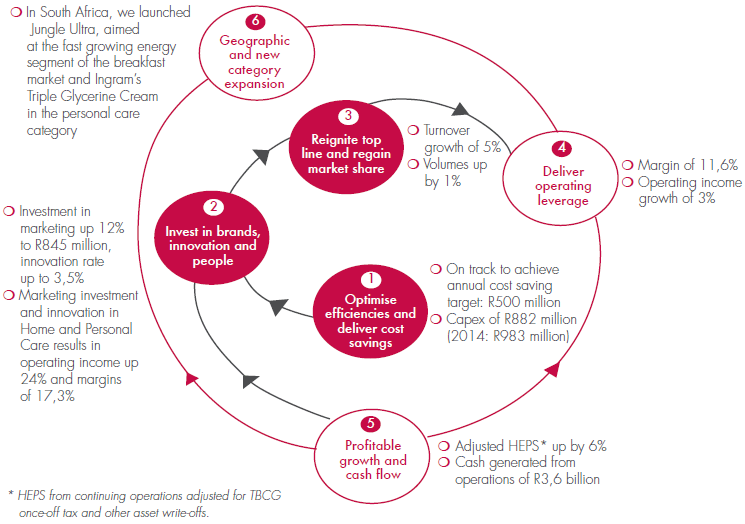
Tiger Brands’ five-year strategic plan clearly defines the vectors that will underpin sustainable and profitable growth for the group. Key drivers emerging from this strategy and critical to achieving our sustainable growth targets are summarised below and shown graphically on page 29:
Where will profitable growth come from and why?
In South Africa’s constrained economy, we will need to
create top-line revenue growth by:- Stimulating markets – driving increased penetration and consumption of our products
- Gaining or maintaining market share in existing categories through brand building and innovation
- Expanding into new categories that align to our core business and deliver profitable growth opportunities.
In the rest of Africa we will:
- Continue to fix, optimise and grow our established businesses and regain the growth trajectory of our exports business
- Seek expansion opportunities through green/brownfield initiatives and appropriate acquisitions
In other emerging markets, we will continue to seek expansion opportunities that build on our core competencies and add scale to our operations.
Key elements to enhance our existing strengths include:
Clear investment choices
Within the group’s business portfolio, the categories and/or geographies that are likely to provide the best potential and requisite return on investment to meet our strategic objectives.
Critical resources of people and talent
Tiger Brands’ growth and expansion plan is challenging and will need the right calibre, capability and capacity of human resources to achieve its strategic objectives. This in turn will require a leadership mix of strategic and entrepreneurial thinking, coupled with disciplined and rigorous executional capability.
In the transitional and expansionary phase of our business from domestic to multi-country operation, we will need to balance the need for a lean, cost-efficient organisation in terms of resources with the necessary depth of talent and leadership capable of driving expansionary growth. Proper talent management and individual development will be a key underpin to the successful execution of our strategy.
Optimum organisational structure
As Tiger Brands matures into a multi-geography, multi-category organisation, we will need an optimal organisational structure to:
- Maximise synergies and cost efficiencies
- Achieve strategic alignment
- Deliver optimal operating efficiency
- Support group strategic initiatives
- Sustain an entrepreneurial approach.
Some changes have already been made to the group’s organisational structure but further refinements will be implemented in determining the optimum structure to lead Tiger Brands into the future and ensure the sustainable delivery of our strategic objectives.
Managing sustainability and reputation
Central to achieving the group’s financial and brand growth objectives is managing sustainability and reputation. Key elements include:
- Building on our current strong brands and reputation
- Promoting the corporate identity to all stakeholder groups
- Adding value to society with integrity
- Driving internal communication, aligned to company goals
- Protecting our licence to trade through proper governance and engaging with stakeholders
- An integrated sustainability approach.
Key drivers