
Our communities
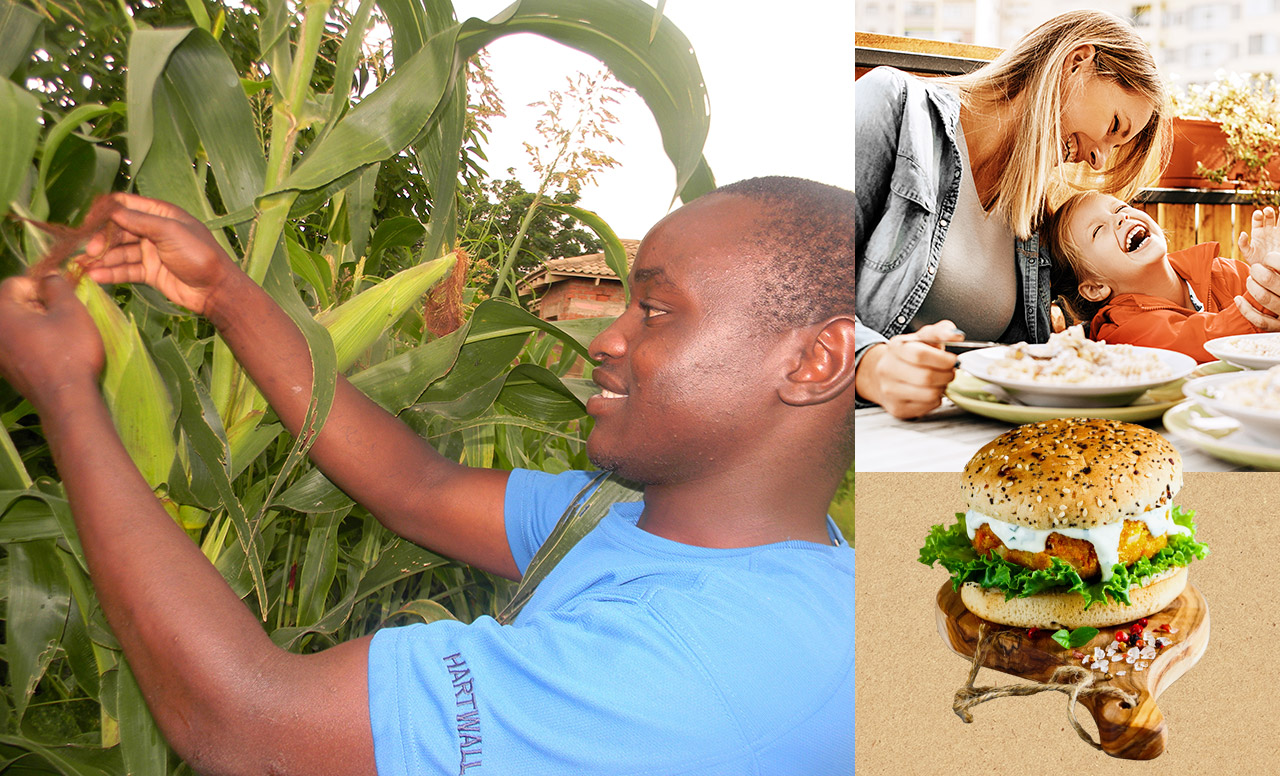
Our sustainability and our success are directly linked to the well-being of our communities. They are the source of our most valuable asset – our employees – and support our businesses by buying our products.
SED and CSI highlights
Spent R32,6 million on socio-economic development (SED) initiatives focused on:
- Nutrition support programme
- Beneficiary capacity building
- Community and household food garden initiative
- Community enterprise development
- Customer, stakeholder and brand corporate social investment (CSI)
- Employee volunteerism
Our approach
To fulfil our responsibility to contribute to the welfare of our communities, we revised our socio-economic development (SED) strategy to be more responsive to challenges.
The new SED strategy is integrated into our business objectives and focused on real – and changing – community needs. In the spirit of stakeholder inclusivity (one of the key insights from the 2017 stakeholder survey, detailed in FY17), our SED strategy has integrated national and societal challenges. This allows us to respond to real issues impacting communities.

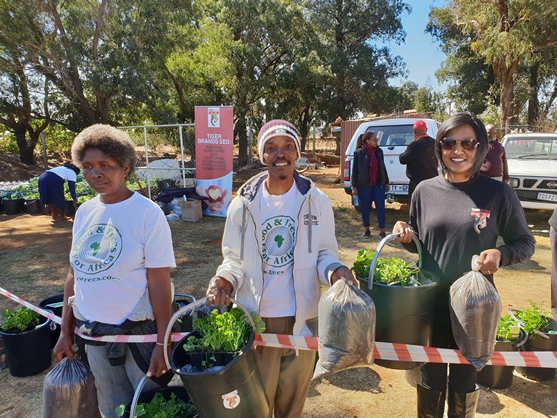
FY18 snapshotIn the review period, we committed 1,5% of net profit after tax, or R35 million, to community development. Due to cost savings, only R32,6 million was spent, achieving several milestones: |
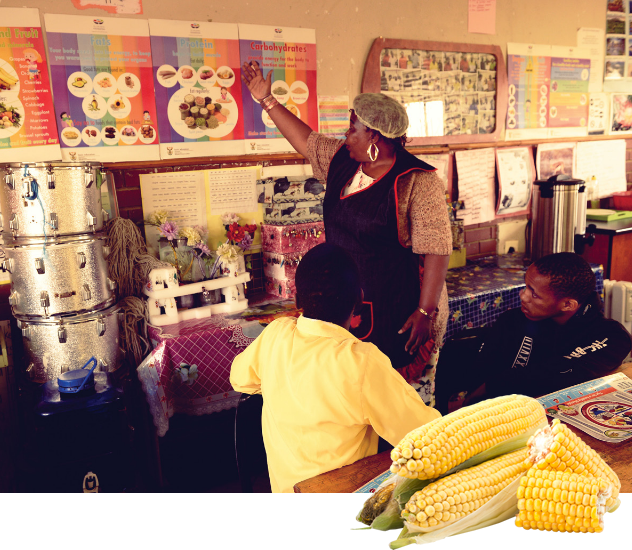
In partnership with the Tiger Brands Foundation, we supported the development and distribution of 15 000 placemats and 10 500 posters focused on nutrition education |
||
| Over 55 600 high-quality, nutrient dense and fortified food packages distributed |
30 000 direct and indirect beneficiaries reached monthly via the Tiger Brands food and nutrition support programme |
||
| Over 3 000 beneficiaries in crisis supported through our CSI and employee volunteerism programmes |
204 community members trained in food gardening and community education |
| Key indicators Rm | 2018 | 2017 | 2016 | 2015 | ||||
| Total SED spend | 30,0 | 35,0 | 23,0 | 24,2 | ||||
|---|---|---|---|---|---|---|---|---|
| Tiger Brands Foundation spend | 28,7* | 23,9* | 19,0* | 15,3 | ||||
| Beneficiaries reached | 88 632 | 104 215 | 100 977 | 118 443 |
* For the foundation’s financial year to end February.
| 2018 investments | Provinces | Nature of support | R000 |
| Food and nutrition support programme | Gauteng, Mpumalanga, Western Cape, KZN, Limpopo, Eastern Cape, North West |
Food donations | 20 612 |
| Customer, stakeholder and brand CSI | All provinces | Food and supplies | 2 648 |
| Employee volunteerism | All provinces | Food and supplies | 597 |
| Beneficiary capacity building, university, household and community food garden initiative |
All provinces | Capacity building, training,garden infrastructure and supplies | 6 000 |
| Nelson Mandela Children's Hospital | Gauteng | Legacy | 1 000 |
| Site-specific community support | Western Cape | Training and supplies | 1 760 |
| Total | 32 617 |
Commitments for FY19
In 2018, we moved from philanthropy towards sustainable community investment. For 2019, we will accelerate this transition through a social mapping process in relevant communities to co-create sustainable programmes with real impact. In implementing more sustainable programmes, we are redirecting our food parcels to new beneficiaries as we focus on creating food-secure communities with better health through:
- Food and nutrition – providing balanced food parcels to the neediest beneficiaries across South Africa by partnering with food-focused NGOs
- Skills development – empowering communities with practical skills and resources to foster the transition from philanthropy to sustainable and long-term economic activity
- Community-based enterprise development – building community enterprises linked to our value chain, benefiting society and the planet sustainably
- Cause and brand-related marketing – supporting brands to create social value by connecting with society for the benefit of both parties
- Employee volunteerism – support Tiger Brands employees to engage in social causes that are close to their hearts and in communities where they live and work
- Tracking the impact of initiatives by implementing a robust monitoring and evaluation system, supported by appropriate NGO partner training.
Preferential procurement
Tiger Brands is committed to driving preferential-procurement practices and local-content requirements. In line with the agri-BEE codes, we provide a valuable procurement opportunity to drive social and economic transformation in South Africa.
Preferential procurement has been integrated with daily business activities across the group, focused on procuring our goods and services from suppliers with favourable BBBEE credentials as well as black owned and black women owned enterprises. Preferential procurement planning is done annually to ensure we steadily improve our spending with these enterprises.
This inclusive approach also ensures our requirements for the best-value package are met, comprising best price, quality, service and delivery performance.
We continue to focus our sourcing strategies to support suitably qualified BBBEE suppliers. Our procurement team has rationalised these strategies to deliver value to Tiger Brands, and meet transformation obligations. This includes ensuring that suppliers improve their BEE credentials.
Within five years, we aim to get as close as possible to the 40% target on this element in our BEE scorecard.
Transformation in the ingredients and agricultural categories remains slow due to the capital and skills needed to establish sustainable supply. Tiger Brands is actively engaging with suppliers to encourage transformation and identifying suitable BBBEE candidates for enterprise supplier development.
| Flagship: In-school breakfast programme | ||||||||

R174 million* spent on the programme to date * Approximate for 2011 to 2018 |

94 no-fee schools across |
 10 regional coordinators |
 38 kitchens constructed/upgraded |
|||||
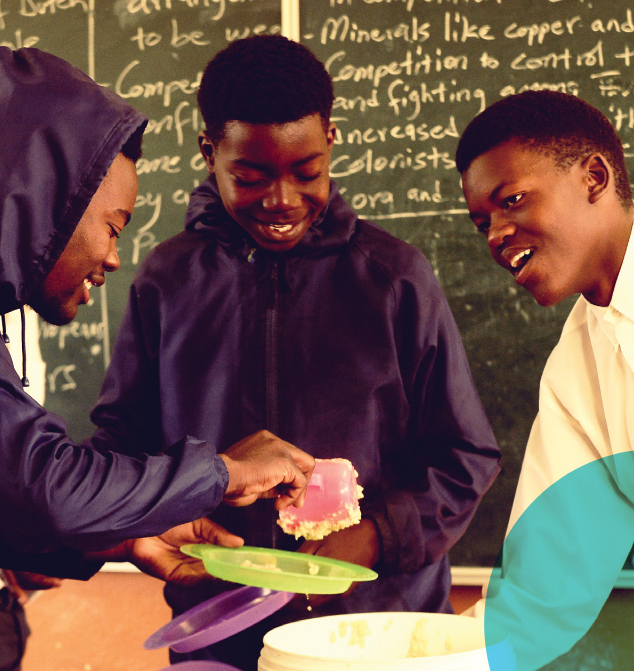
 67 429 learners receive a nutritious breakfast every school morning |

65,2 million warm nutritious breakfasts |
 390+ jobs sustained for the community as food handlers, monitors and regional coordinators |
347 food handlers and community stakeholders received CATHSSETA# accredited training in seven provinces # Culture, Art, Tourism, Hospitality, and Sport Sector Education and Training Authority |
|||||
| We’ve come a long way since 2011 | ||||||||
Although food handlers are employed by the Department of Basic Education, they are paid a stipend by the Foundation.
 |
For FY18, Tiger Brands has spent R12,0 billion with BBBEE verified suppliers |
| THIS INCLUDED: | |
| R1,5 billion with suppliers classified as qualifying small enterprises or exempt micro enterprises (QSE, EME) | |
| R2,3 billion with suppliers that qualify as black owned | |
| R1,5 billion with suppliers that qualify as black women owned | |
Enterprise and supplier development
Tiger Brands is committed to enterprise and supplier development (ESD). Our aim is to develop the operational and financial capacity of black-owned and black women owned enterprises to become part of our value chain – from sourcing to distribution – as reliable and competent suppliers.
We have intentionally focused on developing black farmers, as agricultural procurement is at the heart of our supply chain.
In the review period, we established an enterprise and supplier development office, mandated to develop and execute the Tiger Brands' ESD strategy, unlock procurement opportunities for black enterprises and drive development of ESD programmes.
In the review period, we supported 58 black farmers. This included financial and non-financial support, agronomics and agrarian support, as well as business mentorship and 0% interest loans.
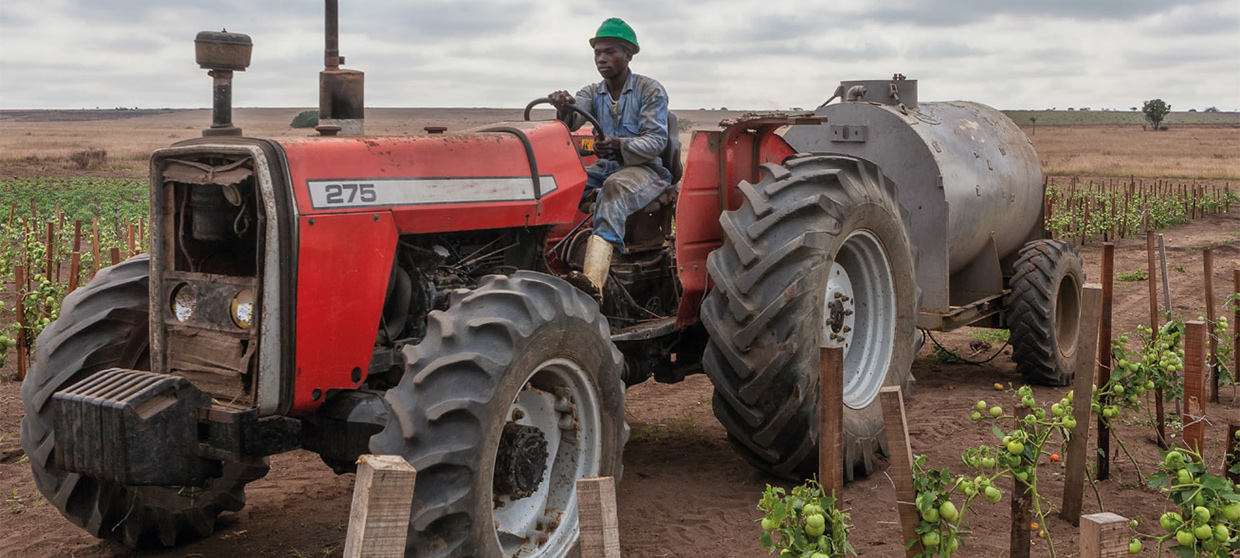
A total of 52 tomato farmers received financial and non-financial support and supplied Tiger Brands with 5 200 tons of tomatoes for the 2018 season. The tomato yield was impacted by pests and diseases, but Tiger Brands will continue to support the farmers.
Under our new smallholder farmer programme, six bean farmers were supported, enabling them to supply 70 tons beans for the 2018 season.
With a total investment of R11 million, these farmers have been entrenched in our procurement chain. In turn, they created 412 jobs, which included 194 female employees. The plan for 2019 is to expand the smallholder farmer programme to other areas like wheat, sorghum and peanuts.
An additional investment of R1,3 million was made in Khayelitsha Cookies, Cape Town, to commission a factory producing Purity baby rusks. Khayelitsha Cookies created 91 jobs, all of them women.
Tiger Brands Foundation
The Tiger Brands Foundation was established in 2010 to enhance our community impact and assist a broader range of underprivileged people in South Africa, particularly communities with whom we interact most. It is managed by an independent board of trustees which establishes the criteria and procedures governing resource allocation.
In 2011, it implemented the first in-school breakfast programme in partnership with the Department of Basic Education's national school nutrition programme (NSNP). From six primary schools in Alexandra, this has expanded to 94 schools in all provinces, providing the essential breakfast meal to around 67 500 learners. By September 2018, over 65 million breakfasts had been served to our country's most vulnerable learners.
The programme is funded by a 'trickle dividend' equal to 30% of dividends received from the Foundation's 5% shareholding in Tiger Brands. This year, the foundation has invested heavily in re-engineering its structure and skills to continually improve its efficacy. We were honoured to have our initiatives selected as a case study for effective trust management by Intellidex (Understanding Empowerment Endowments, Intellidex, 2018). This shows that our efforts at building a lean and effective trust that impacts communities are being recognised.
Achieving our FY18 commitments
The Foundation honoured all its commitments for the review period:
- Expanded its public-private partnership model for in-school nutrition, adding four schools and one corporate partner
- Sponsored the first prize in the Department of Basic Education's annual NSNP awards for best school and best district. For the best school, this means R450 000 towards a school kitchen and adoption onto our in-school breakfast feeding. The winning school in 2018 was Ratanda Primary School in Gauteng, where the breakfast programme is already operating and kitchen construction in planning phase. The winning district was Thabo Mofutsanyana in the Free State, which elected to invest its donation in tablets to replace current paper-based monitoring tools
- Provided a stipend of R550 per month for 367 food handlers, injecting over R2,4 million into vulnerable communities
- Donated at least four more school kitchens (for schools identified by the department). These are being constructed in the Northern Cape, with a corporate funder, Western Cape and Gauteng, through the NSNP award.
In addition to these commitments, the Foundation has extended its impact with the following projects:
- A food-handlers skills training programme accredited by the South African Qualifications Authority (SAQA) and welcomed by the Department of Basic Education. This was piloted in the Free State, and will give food handlers skills that will enhance their employability or provide opportunities for entrepreneurship after completing the nutrition programme.
- Ensuring uniform food-preparation safety and hygiene standards by supplying the necessary equipment, supported by educational campaigns for kitchen employees as well as learners. Random hygiene testing in school kitchens has started and will become a standard practice in all schools partnering with the Foundation.
Commitments for FY19
- Programme expansion: we will continue to approach corporate partners to expand the programme to no-fee schools in South Africa
- Thought leadership: The Foundation aims to raise awareness and improve the impact of in-school breakfast programmes in South Africa through the following activities:
- Host a learning forum with the University of Johannesburg to engage with academic and public-sector thought leaders on the impact of in-school breakfast programmes
- Hold a conference focused on developing the skills of principals in all partner schools
- Fund independent research on in-school breakfast and nutrition in South Africa.
- Community development projects: use our partnership with 94 schools across the country to identify and implement sustainable community development projects to improve the lives of vulnerable learners in communities around those schools.